
A tiny plant with a different job
This work was not aimed at producing food. The plants were used to help further treat water from existing wastewater ponds. For such environmental applications, relevant questions include how the plants develop and how water pollution changes during cultivation.
The researchers examined different operating conditions and compared indoor cultures with cultures exposed to outside environmental conditions. Water movement and biological surface growth were also relevant. Their question therefore extended beyond identifying one favourable adjustment.
More biomass under controlled conditions
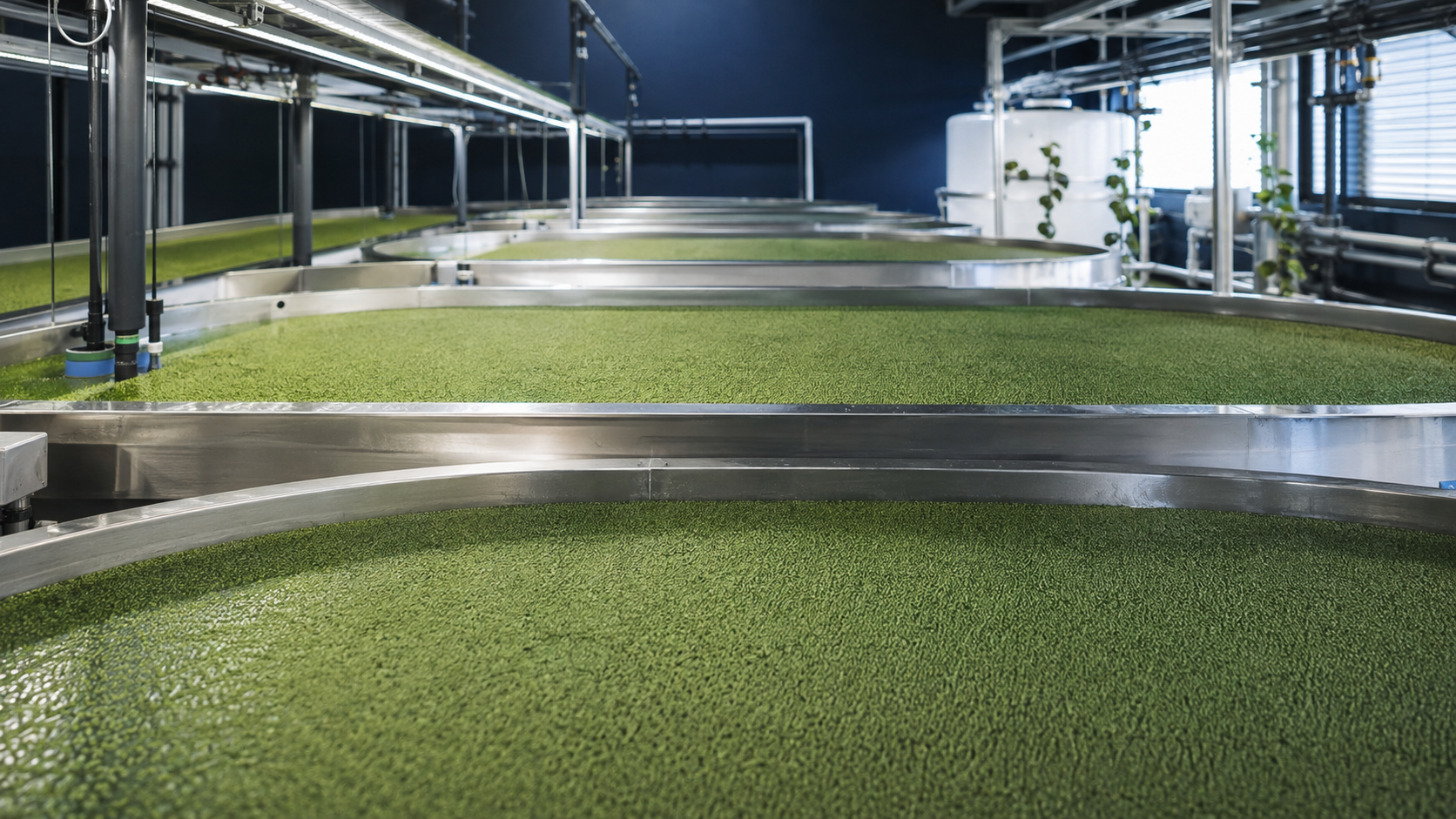
Under the conditions studied, indoor cultures developed more biomass on average. Water circulation also mattered, with higher growth rates observed in recirculated systems. The interaction is the useful takeaway: a tiny floating plant responds both to the water's contents and to the environment immediately around it.
The findings do not mean that indoor facilities are always superior. Several factors differed between the comparison systems. Light, temperature and other water conditions acted together. The observed difference cannot responsibly be attributed to a single factor or transferred unchanged to other locations.
The time boundary of the experiment matters too. A limited study captures only part of a culture's life. It does not automatically show how the same facility behaves over long operating periods, changing seasons or repeated harvests. Stable continuous operation remains a further challenge.
Why biofilms belong in the picture
Biofilms deserve particular attention. These are microbial communities that form coatings on surfaces. In the outdoor units, the authors observed more pronounced coatings alongside reduced plant growth. Such changes help explain why the condition of a culture cannot be assessed by looking at the plants alone.
Improvements in water quality also result from the wider system. Plants, microorganisms and other processes may contribute. Treatment performance therefore cannot simply be equated with the amount of duckweed harvested. Nutrient removal from wastewater likewise does not establish that the resulting biomass is suitable for eating.
This distinction is central to interpreting the paper. The species investigated was Wolffia brasiliensis, not Wolffia globosa. The plants' origin and intended use also matter. Food-grade cultivation requires its own evidence about starting material, water, safety and the eventual product.
A research lead, not a performance promise
The study consequently offers no direct production guarantee for a Wolffia globosa facility. It instead illustrates the importance of operational control, hygiene and observing biological changes. What can initially be carried forward is the careful research question, rather than a ready-made result for every species and purpose.
Published in Wetlands, the paper is valuable for its comparative view of plants and their surroundings. Successful cultivation involves more than rapid growth under one favourable condition. It requires a system whose behaviour has been examined for its particular intended application.