Observing growth without repeated harvesting
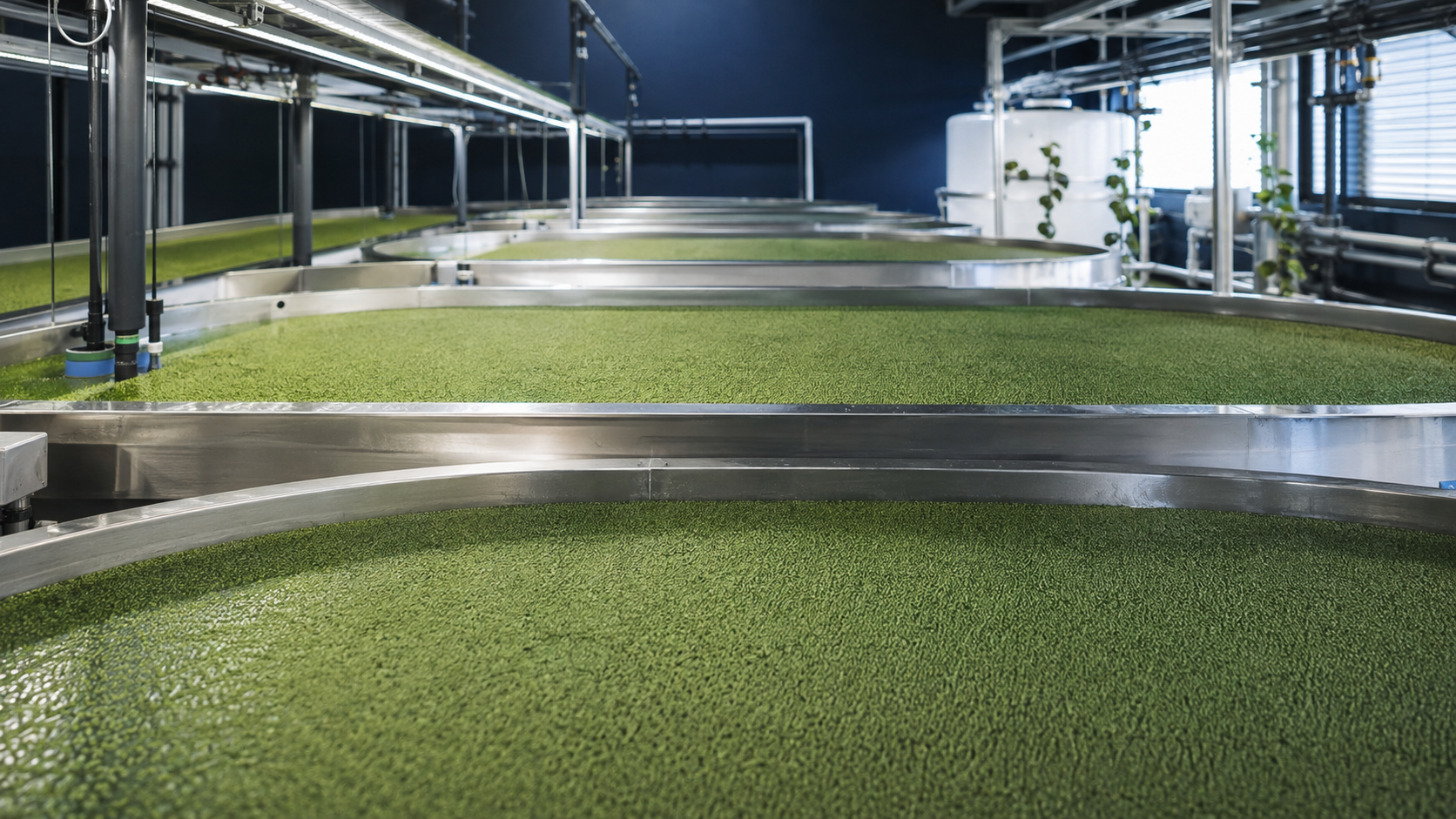
The underlying idea is easy to picture. Images can be captured repeatedly without removing plants each time. A sequence may reveal changes over time, potentially helping operators understand a culture's behaviour and notice unusual developments earlier.
A camera does not thereby become a direct weighing instrument. Covered water surface initially tells us about area. The amount of plant material also depends on density and overlap. Biomass estimates therefore require a demonstrated relationship with actual reference measurements.
An image is not a weight measurement
Water surfaces create additional difficulties. Reflections can obscure plant boundaries, while fronds and tiny plant bodies can touch or overlap. A change in an image does not necessarily mean a change in growth. Lighting and capture conditions also affect what a system detects.
The available excerpts from application CN122888343A describe combining image analysis with machine learning. The proposed method is intended to account for these difficulties and estimate growth-related properties from images. Its purpose can be explained at this level; the detailed technical implementation is a separate matter.
The direction is interesting because repeated observation could provide a more continuous picture than isolated samples. It would complement direct examination of the plants. Whether the resulting estimates are reliable would still need to be established through suitable comparison measurements.
What an application actually establishes
The document type creates clear boundaries. A published patent application describes a claimed technical approach. It does not by itself establish either a patent grant or independent scientific validation of performance. Potential legal protection and the practical quality of a method are different questions.
A convincing description likewise does not establish a commercially proven system. Reliability under different conditions and transfer to other cultures would matter. A model may be useful in one investigated setting without already being suitable for every facility.
This article is based on a PatSnap summary and derived text excerpts. They support identifying the document as a published application, but do not replace a complete review of the official text and current legal status. Accordingly, the article makes no determination about freedom to operate or established industrial performance.
Why the direction could matter
The topic nevertheless helps explain the growing interest in non-destructive observation within the duckweed sector. Very small plants are not always convenient to track through conventional sampling. Reliable image-based monitoring could complement direct measurements, provided its limitations are understood alongside its possibilities.
Progress therefore lies beyond the label AI. What matters is whether images yield verifiable information about a real culture. The application signals one direction of development. How far the proposed approach can go remains a question for transparent evaluation and practical experience.