Starting point
At ICDRA 2026 in Naples, Dr. Metha Meetam of Mahidol University presented a remarkably concrete picture of the current development. According to his presentation, around 150 Wolffia farms in Thailand are now GAP-certified. Annual production is estimated at approximately 500 tonnes of fresh biomass, with a projection of around 3,000 tonnes in 2027. Wolffia products are reportedly already available in more than 300 shops and restaurants.
These figures should be understood as numbers presented in a scientific conference lecture, not as official Thai production statistics. Even so, they clearly illustrate the momentum of the sector.
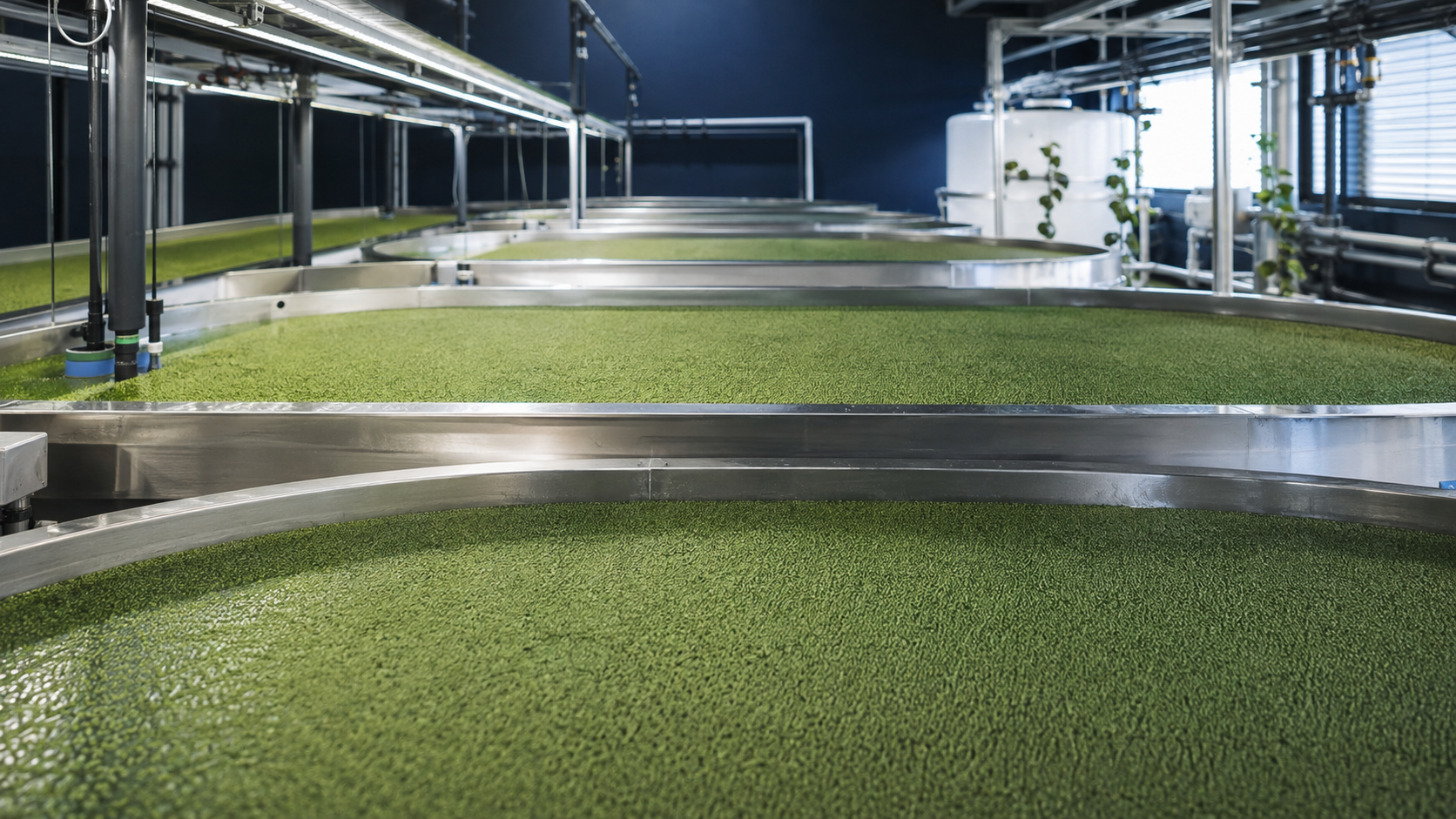
Only a few years ago, much of Thailand’s Wolffia was harvested from natural ponds. This created seasonal fluctuations, limited volumes and concerns around water quality and food safety. The current transition is increasingly based on controlled cultivation, quality standards and technological scaling. Thai start-ups, Meetam noted, are playing an important role in developing larger production systems and new products.
What the evidence shows
Research activity is growing just as rapidly. Meetam reported an average of 1.8 duckweed publications per year in Thailand between 2016 and 2020, 9.25 per year between 2021 and 2024, followed by 39 publications in 2025 and already 46 in 2026. Counting methods may vary, but the direction is unmistakable: Thailand is emerging as one of the most important international hubs for Wolffia research and commercialization.
For AquaSphere, this matters because Thailand combines several critical ingredients at once: biological diversity and traditional knowledge, rapidly expanding scientific expertise, producers, start-ups, government-backed quality standards, product development and an existing consumer market.
This also changes the role of potential partnerships. Thailand is not only a possible sourcing market for biomass. More interesting opportunities lie in joint development of cultivation systems, indoor production, nutrient media, food safety, standardization, functional ingredients and new product formats. Research partners such as Mahidol University, Chiang Mai University and other Thai institutes may become as important as conventional suppliers.
Practical relevance
Europe adds another layer of opportunity. Technologies and quality concepts developed in Thailand can be adapted to European requirements, while European partners can contribute expertise in controlled production, analytics, regulatory documentation and premium applications.
The most compelling model is therefore not “Thailand or Europe”, but an interconnected value chain: research and biological expertise in Thailand, technology and standardization developed jointly with European partners, and applications ranging from food and functional food to supplements and novel ingredients.
Thailand is currently demonstrating how quickly Wolffia can move from traditional food to an industrially relevant crop. For AquaSphere, this transition phase may be the most strategically valuable moment to engage.