
Context
In a review published in New Phytologist on 14 October 2026, Rebecca Fairburn, Alexander Ware, and Anthony Bishopp of the University of Nottingham examine how plants have lost roots during evolution. The fully rootless duckweed genera Wolffia and Wolffiella are prominent examples.
Nutrient uptake without roots
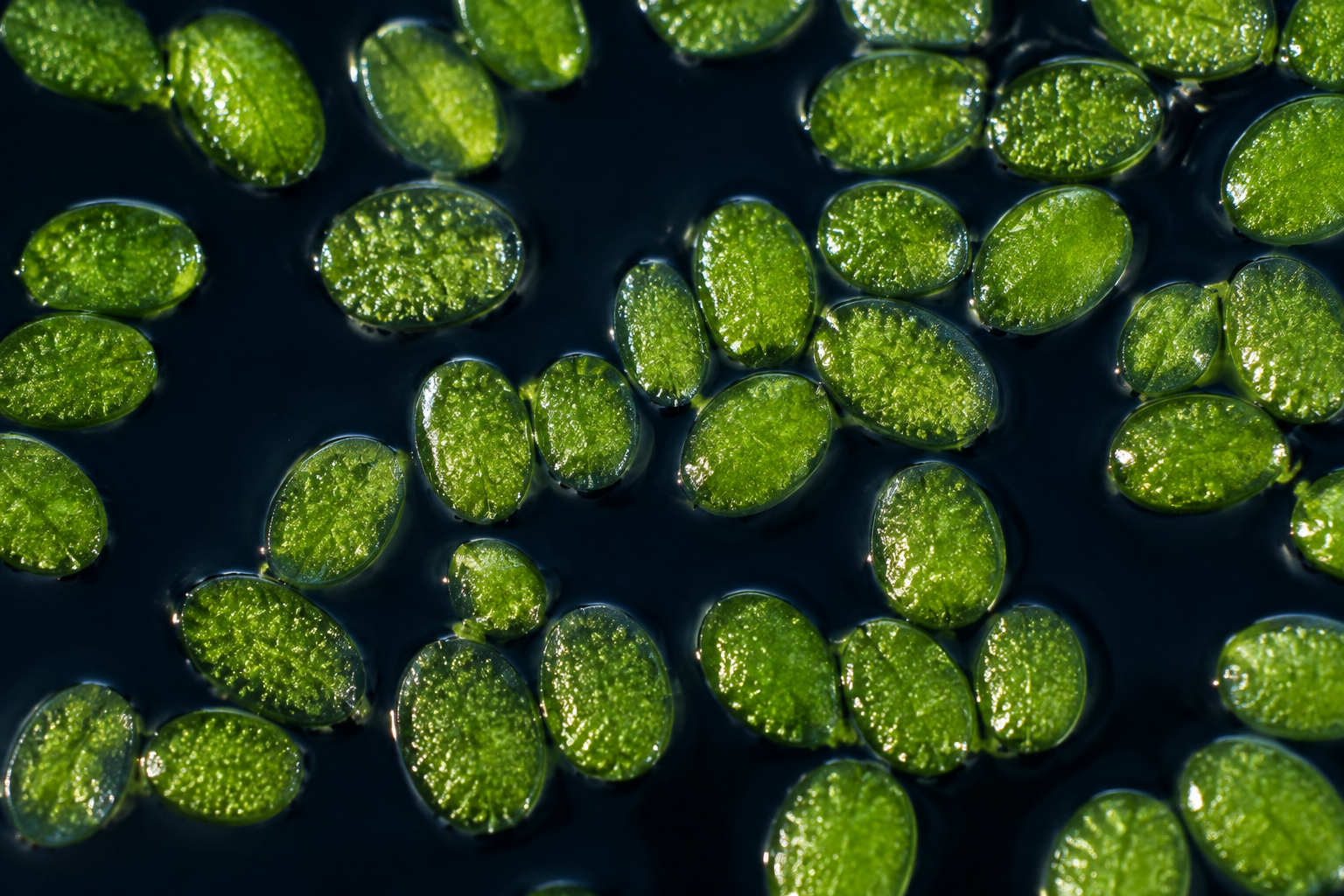
In many plants, specialized root tissues carry much of the nutrient-uptake workload. Free-floating Wolffia plants have no true roots and lack the conventional complex vascular system found in larger plants. Instead, their tiny bodies remain in direct contact with the surrounding water, enabling nutrient uptake through non-root tissues.
The authors explain that, in duckweed, genes typically associated with nutrient uptake in roots of other plants can function in different tissues. Evolution has not simply removed access to nutrients; it has reorganized how that job is done.
What can genomes reveal?
Growing availability of plant genome sequences is opening new ways to investigate the genetic basis of rootlessness. The review notes, for example, the absence of the gene WOX5 across several rootless plants. Importantly, that observation alone cannot establish whether losing the gene caused root loss or followed it.
This publication is a scientific synthesis, not a new cultivation trial or a validated recipe for improving Wolffia productivity.
What the review establishes—and what it does not
The authors examine rootlessness in several ecological settings, including aquatic habitats, epiphytic growth, arid environments and carnivory. Duckweed is a particularly useful research model because it can be grown in the laboratory more readily than many other rootless plants. In Wolffia, root loss coincided with extreme miniaturisation and a strongly simplified body plan.
This is a conceptual research framework, not evidence for a specific production setting. The review does not report new experiments identifying optimal nutrient concentrations, mixing conditions or growth rates for Wolffia globosa. Such claims require dedicated cultivation studies or independent experiments.
Why it matters for AquaSphere
For Wolffia globosa cultivation, the review encourages a closer look at interactions between the plant surface and the culture water. Nutrient availability, mixing, water chemistry, and stable medium composition all warrant investigation. The paper does not prove that changing any one of these variables will raise yields in W. globosa; that requires controlled, species-specific experiments.
A useful research approach would compare defined nutrient media while holding light and temperature constant and monitoring growth, biochemical composition, and water conditions. This would translate a fundamental biological insight into measurable process questions.
Rootless does not mean effortless. It means that understanding Wolffia's physiology is essential to designing reliable production systems.
Evidence status: Peer-reviewed scientific review, published 14 October 2026; not an experimental optimization of W. globosa cultivation.
Source: Rebecca Fairburn, Alexander Ware & Anthony Bishopp, “Roots to simplicity: when evolution removes a key organ,” New Phytologist (2026). https://doi.org/10.1111/nph.71639